ShipBob Pulse
Project overview
From a broad challenge to a functioning AI-powered product.
As part of a company-wide Builder Challenge, I was given a high-level prompt to create a “social media monitoring tool.” Working independently, I expanded that idea into Pulse: an AI-powered command center that helps ShipBob's marketing and sales teams monitor brand conversations, prioritize issues, generate responses, and identify competitive sales opportunities.
I owned the product end to end, from defining its capabilities and designing the experience to building and integrating the systems that power it.
Role
Solo product builder
Scope
Product definition, UX/UI, development, integrations
Users
Marketing and sales
Result
Selected as category winner and adopted by marketing
The challenge
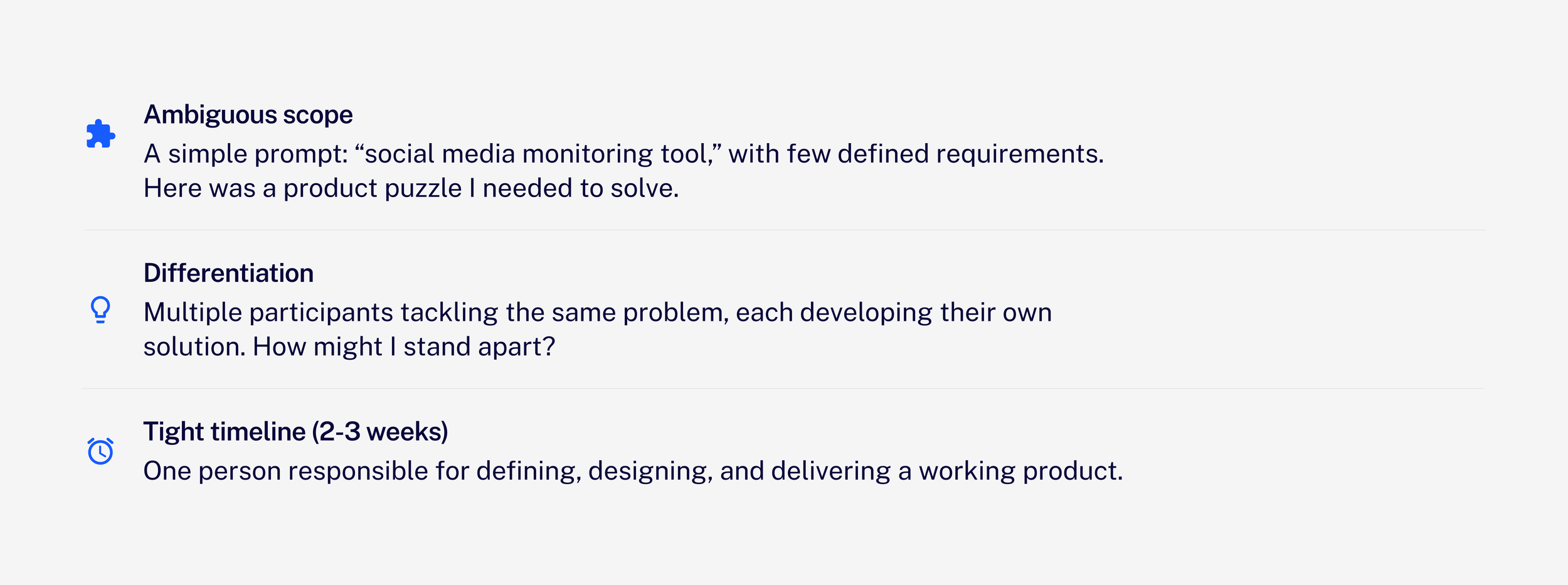
Given a broad challenge and just 2–3 weeks, I needed to define, differentiate, and independently build a compelling solution.
The company-wide Builder Challenge provided a simple prompt: build a “social media monitoring tool.” With minimal requirements and multiple participants tackling the same problem, I had to determine what the product should do, how it could stand apart, and what I could realistically deliver within the timeline.
My approach
From idea to implementation
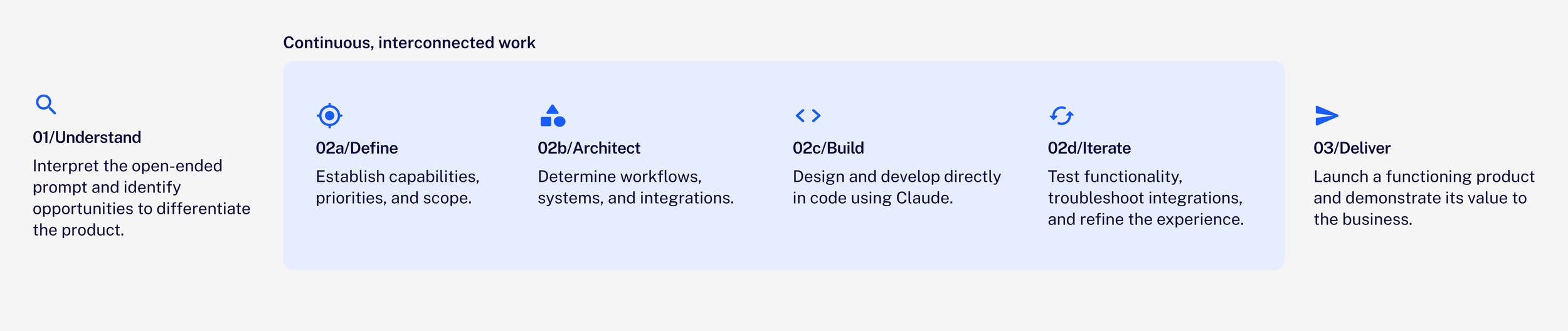
Working in Claude, I designed and built the product directly in code, continuously moving between defining, building, and refining.
Designing a system, not just an interface
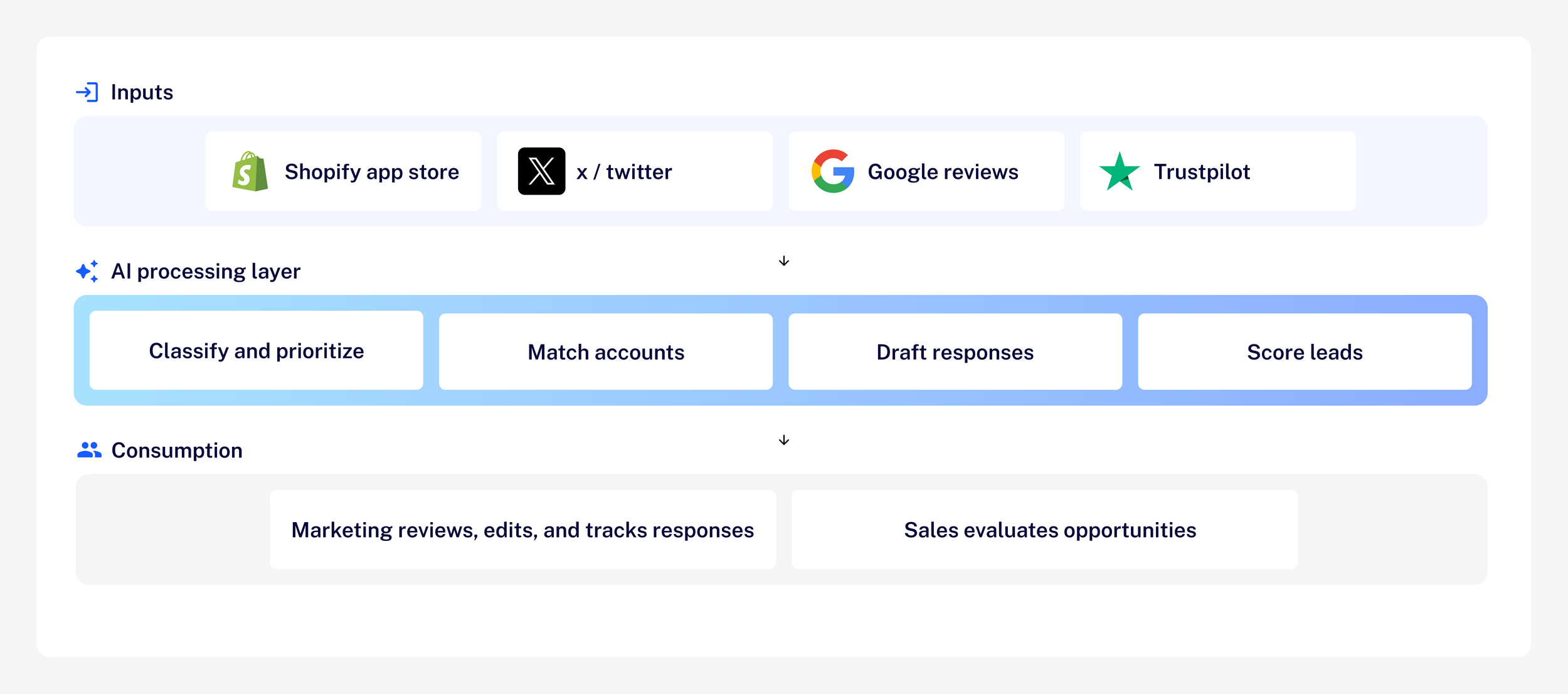
Building Pulse required connecting multiple data sources, AI-powered decision-making, and human workflows into a cohesive experience. I used n8n to automate the collection of ShipBob and competitor mentions across social and review platforms, with Claude classifying and scoring mentions as part of those workflows. The resulting data was then stored in Supabase, which served as the backend for the Pulse application, surfacing prioritized mentions and opportunities for users to act on.
The solution
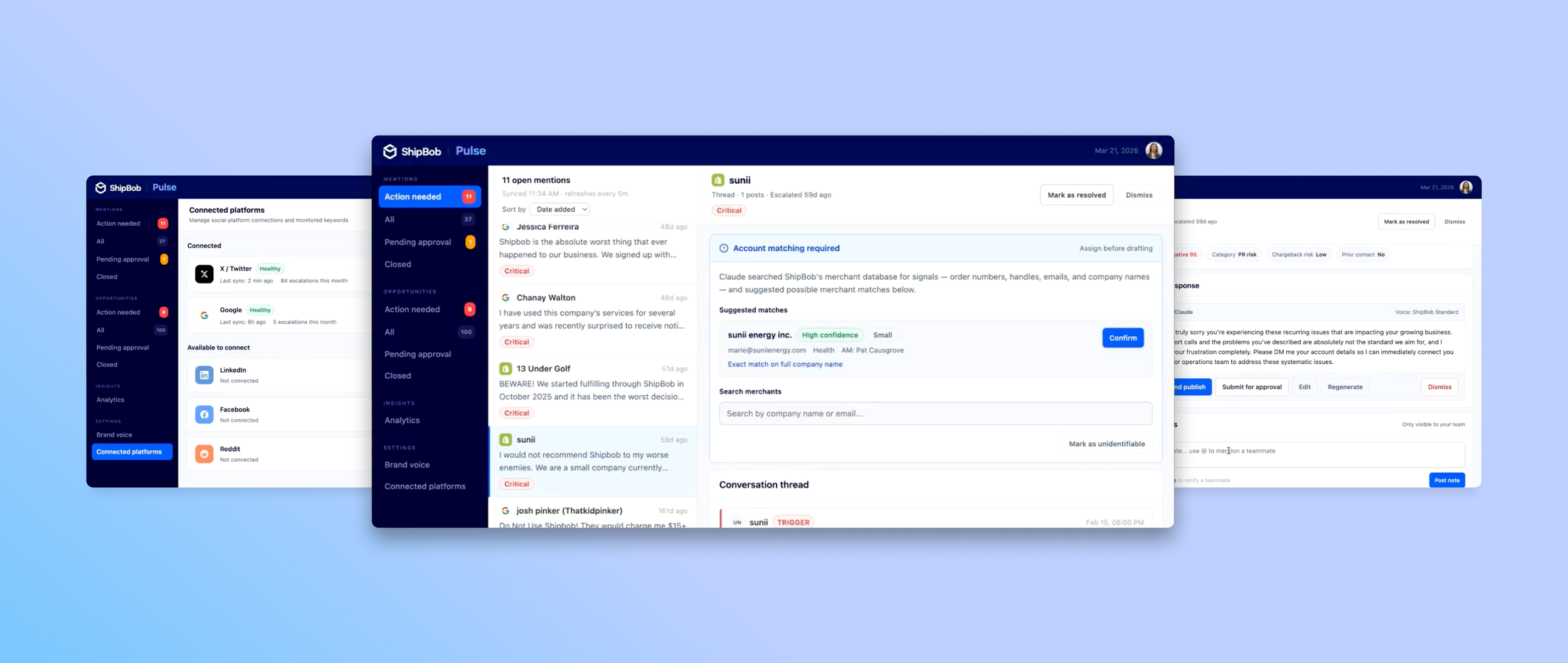
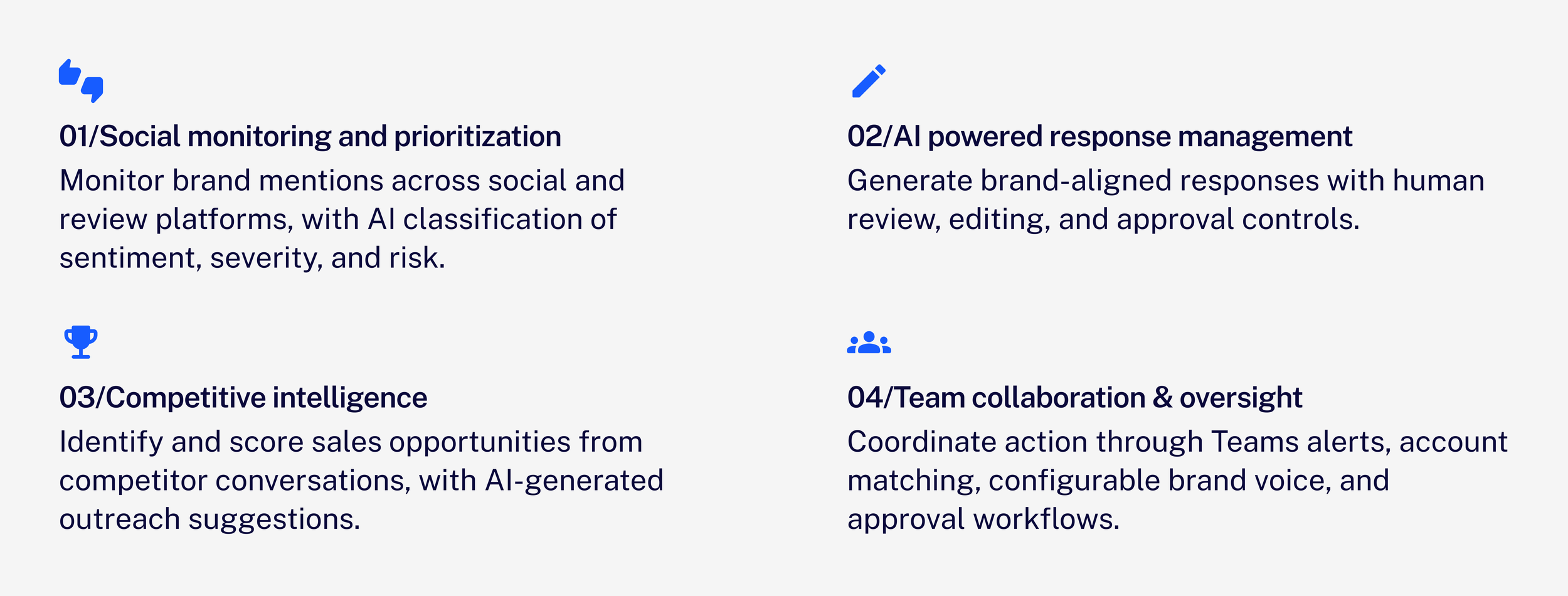
Pulse brings social monitoring, AI-powered response management, and competitive sales intelligence into one platform. The demo I shared with our executive team can be viewed here. Note that some features included in this demo, e.g. the analytics page and push functionality, were descoped in the interest of getting an MVP in the hands of my users. I’ve included screenshots below as well.
Overview + account matching via Salesforce
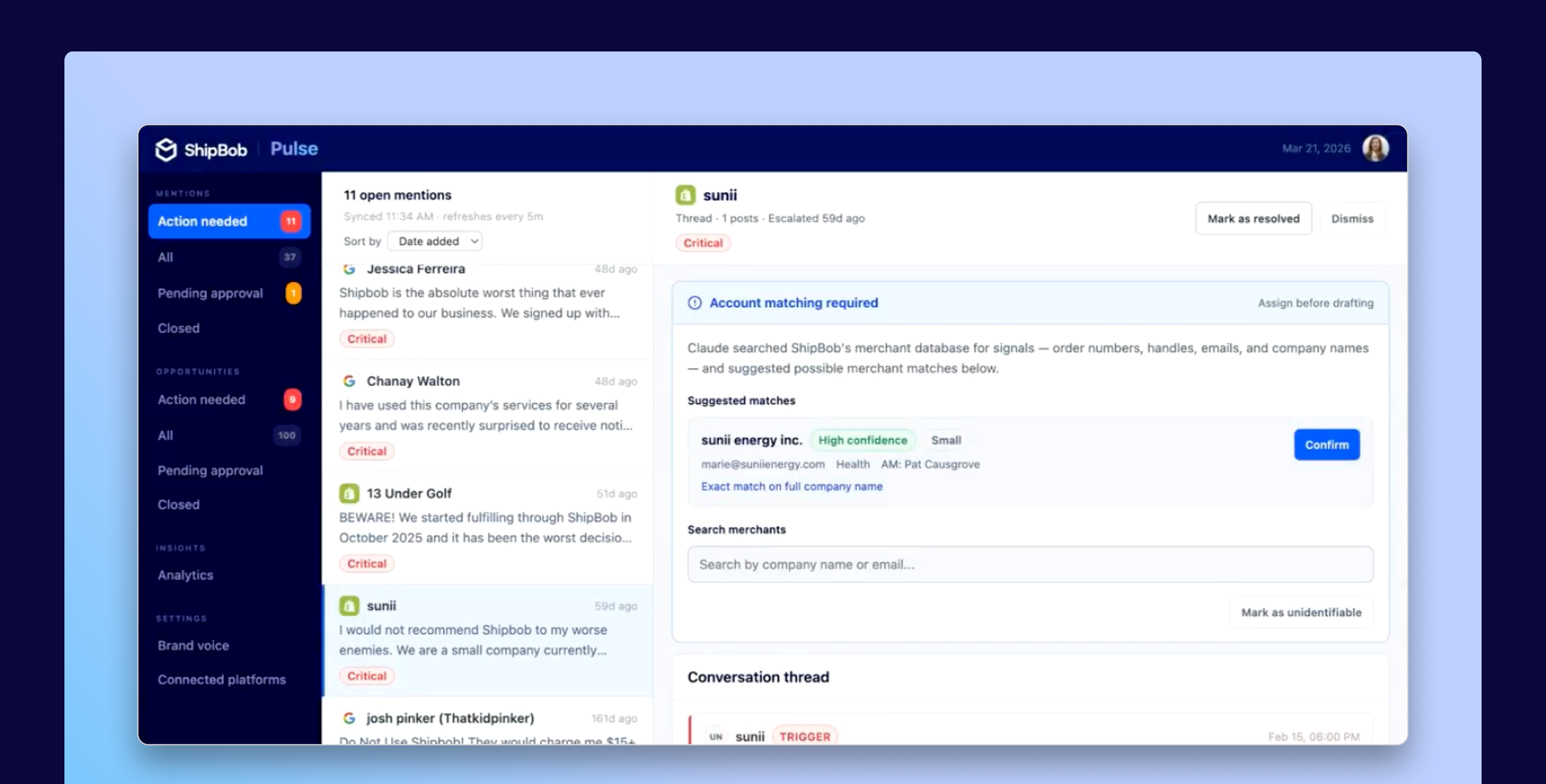
The interface follows a three-panel layout. The side navigation organizes the experience into Mentions (conversations about ShipBob), Opportunities (conversations about competitors), Insights (ultimately descoped), and Settings. Users can browse conversations in the Feed and review individual mentions in the Details panel. Claude automatically classifies and assigns severity scores to ShipBob mentions and opportunity scores to competitor mentions, helping teams prioritize conversations based on urgency and potential business value.
Shown here in the Details panel is another important capability that emerged during testing: using Claude to identify potential merchant account matches in our Salesforce database, helping the team connect public complaints to existing customers.
AI-drafted responses
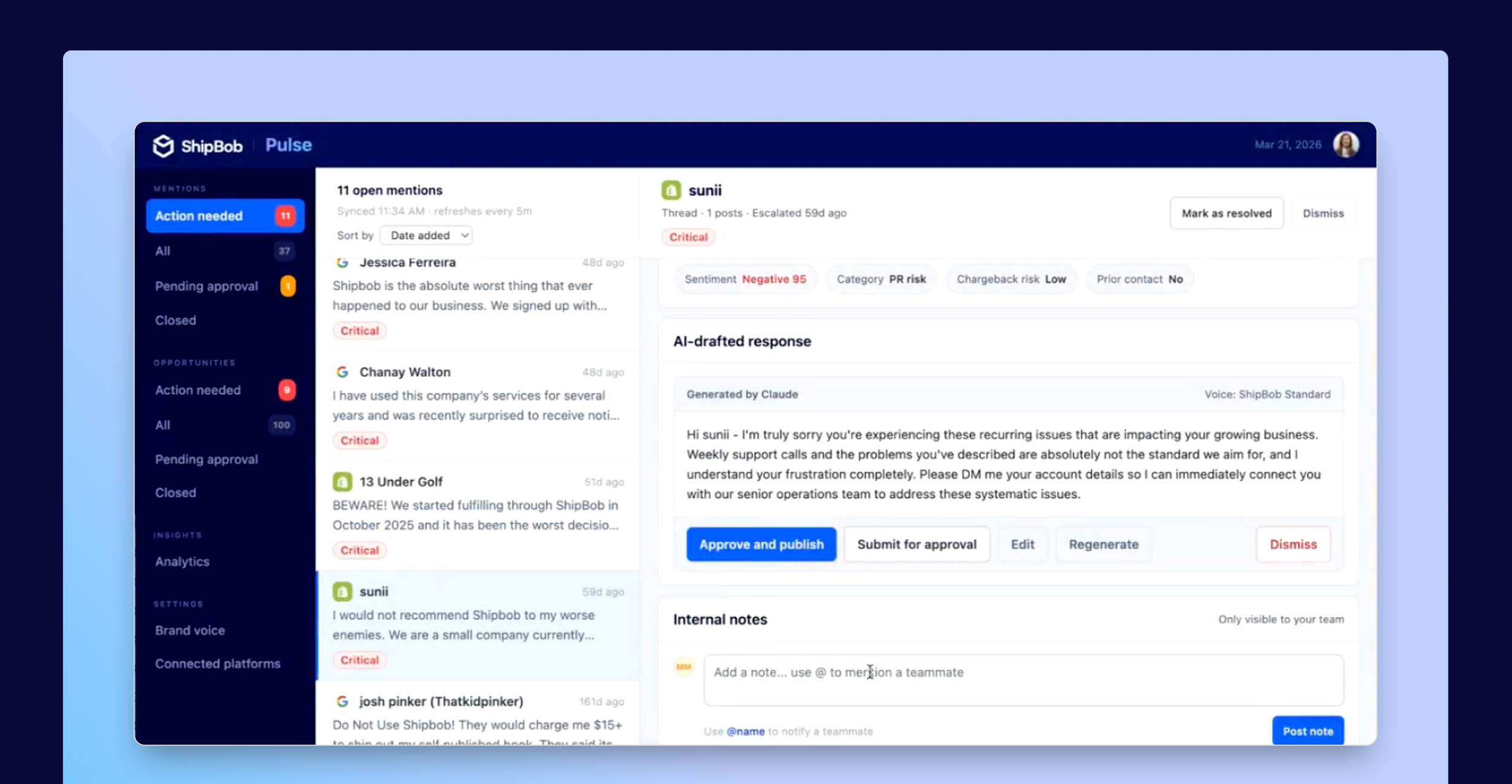
Claude generates contextual, brand-aligned responses to incoming mentions, allowing users to review, edit, regenerate, and approve drafts, with additional oversight for higher-risk interactions. Direct publishing and the in-app approval workflow were deferred beyond the MVP.
Connected platforms
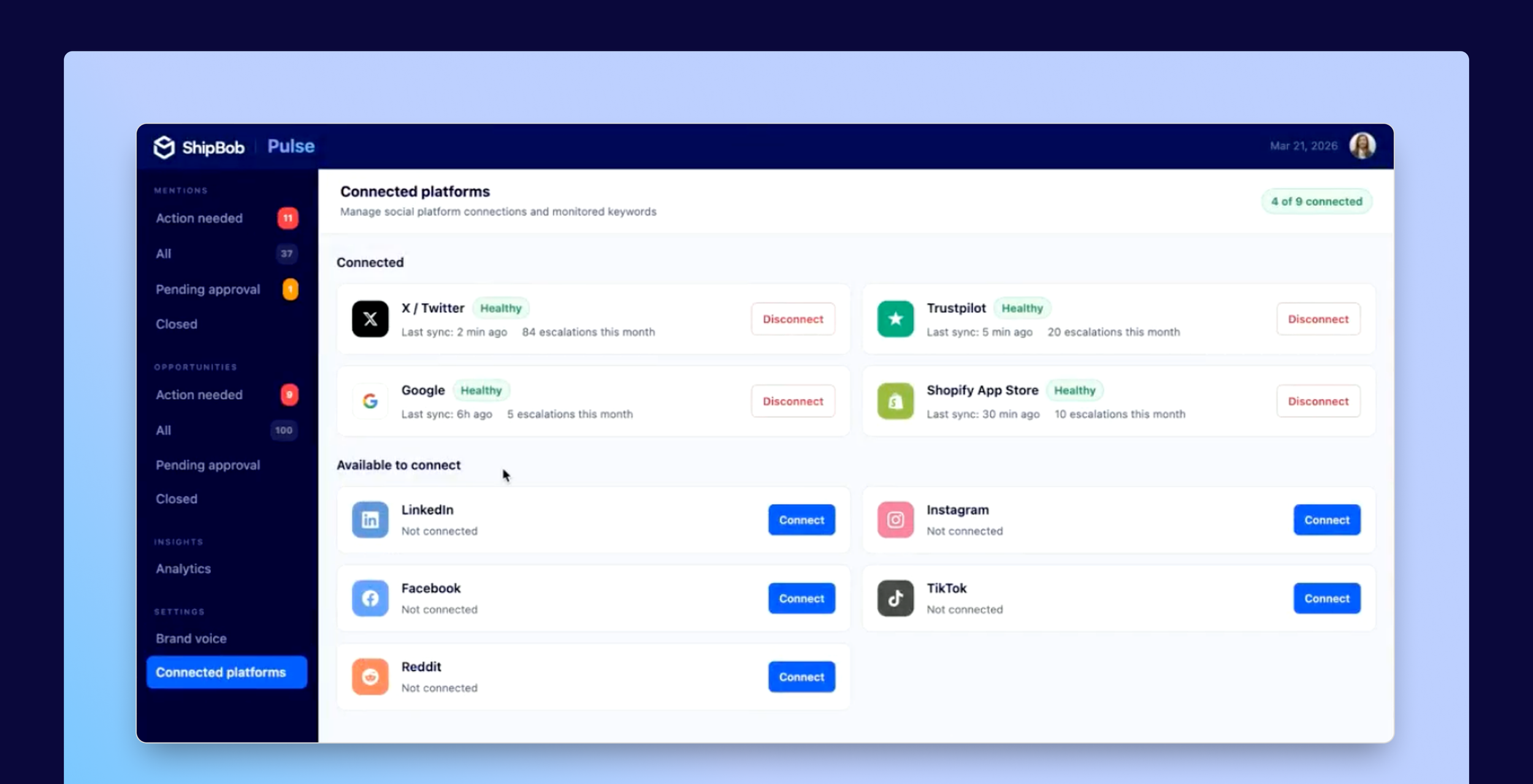
Pulse was designed to support monitoring across a wide range of social and review platforms. For the MVP, I prioritized integrations with X, Trustpilot, Google Reviews, and the Shopify App Store, which stakeholders identified as the highest-value sources, while leaving room for future expansion.
Real-time Microsoft Teams notifications
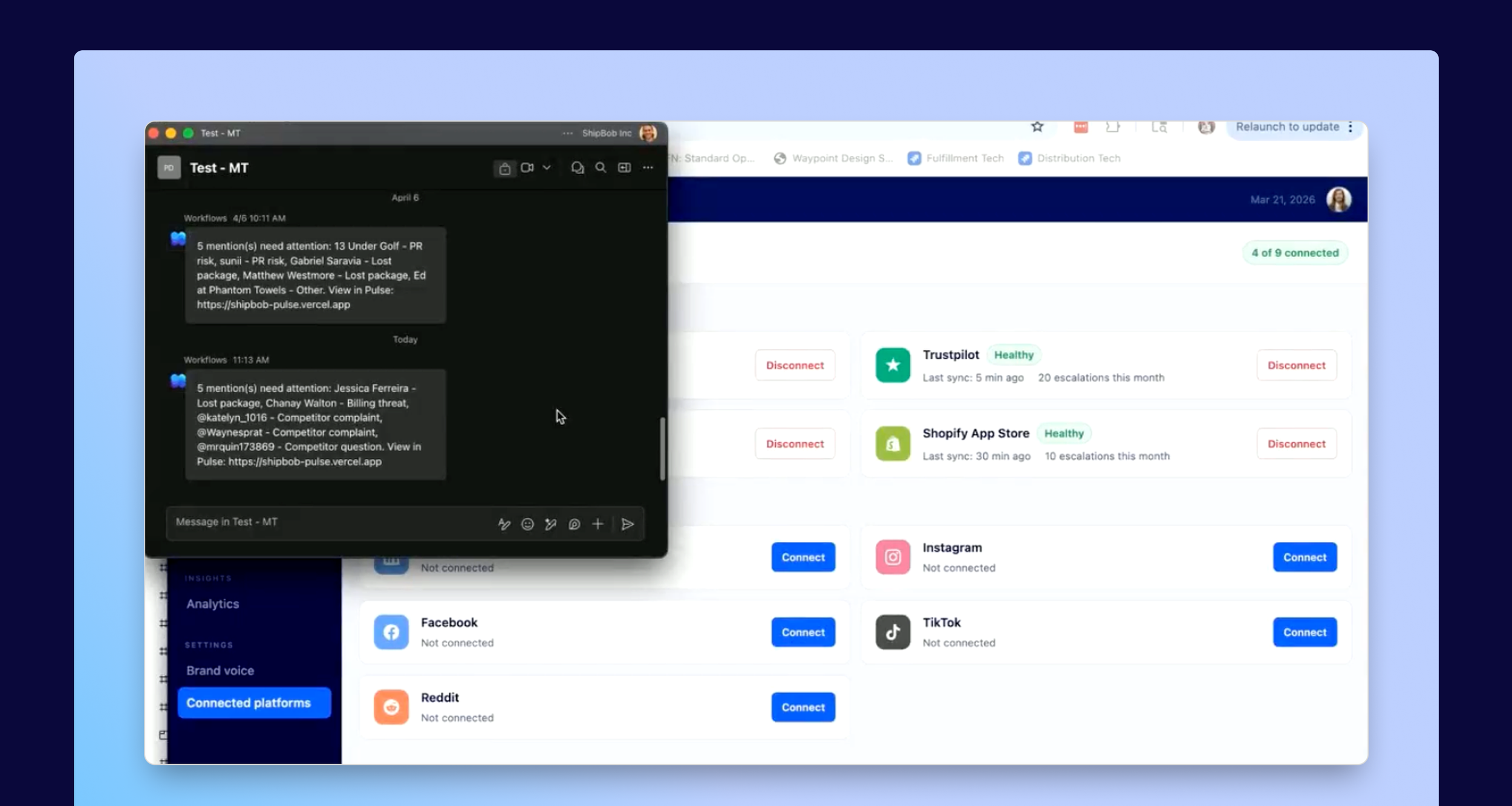
Pulse integrates with Microsoft Teams to automatically alert stakeholders when mentions require attention. Notifications summarize relevant conversations and provide a direct link to Pulse, helping Marketing and Sales quickly identify and act on high-priority issues and competitive opportunities without continuously monitoring the application.
Reflections
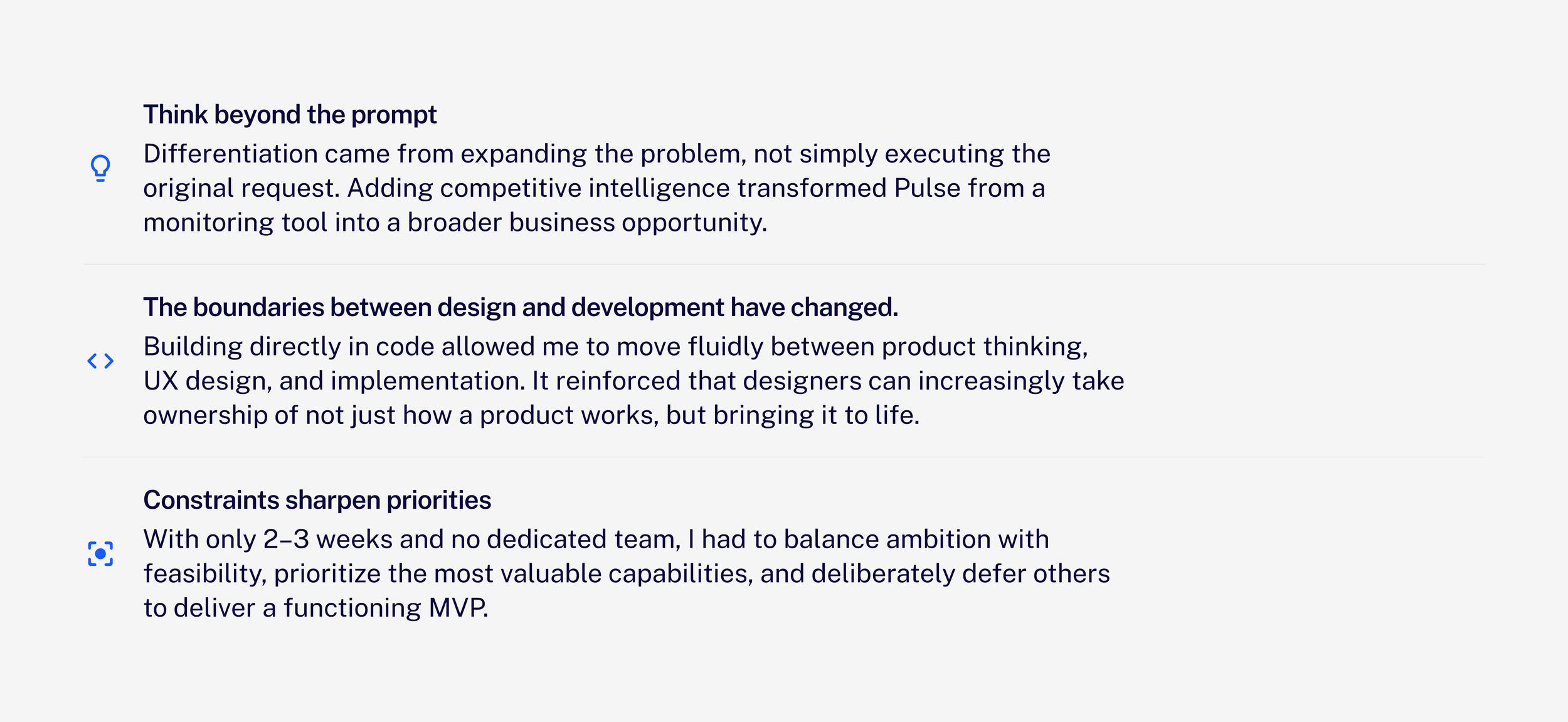
Building independently expanded how I think about product ownership, technical execution, and the role of design.