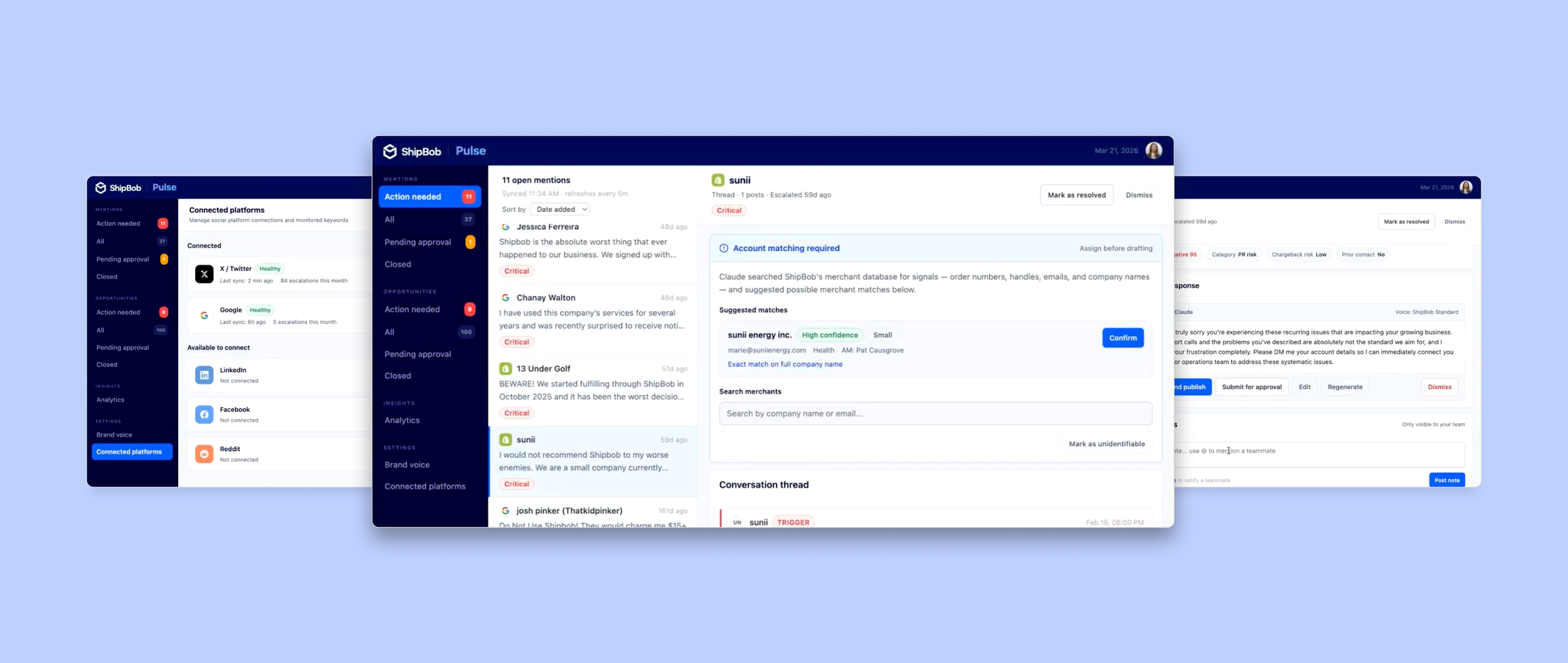
ShipBob Pulse
As part of ShipBob’s company-wide Builder Challenge, I built and shipped Pulse, an application that scans social and review platforms for ShipBob mentions and competitive intelligence. Selected as one of three winners company-wide, Pulse is now in active use.
Team
While I built this as a solo project, I collaborated with our marketing and Salesforce SMEs.
Role
I led all strategy, design, testing, and implementation.
Impact
Pulse eliminated the need for a third party vendor and added functionality that was missing from their offering.
Pulse monitors brand mentions across X/Twitter, Trustpilot, Google Reviews, and the Shopify App Store in real time, uses Claude to classify severity and auto-draft brand-voiced responses for the marketing team to review and separately scans for competitor mentions (ShipStation, ShipHero, Flexport) to surface and score sales opportunities for outreach. Everything is configurable from the app: brand voice, routing rules, escalation categories, and tone overrides. Microsoft Teams notifications, account matching (against Salesforce), internal notes, and approval workflows tie it all together. I had a lot of fun building it.
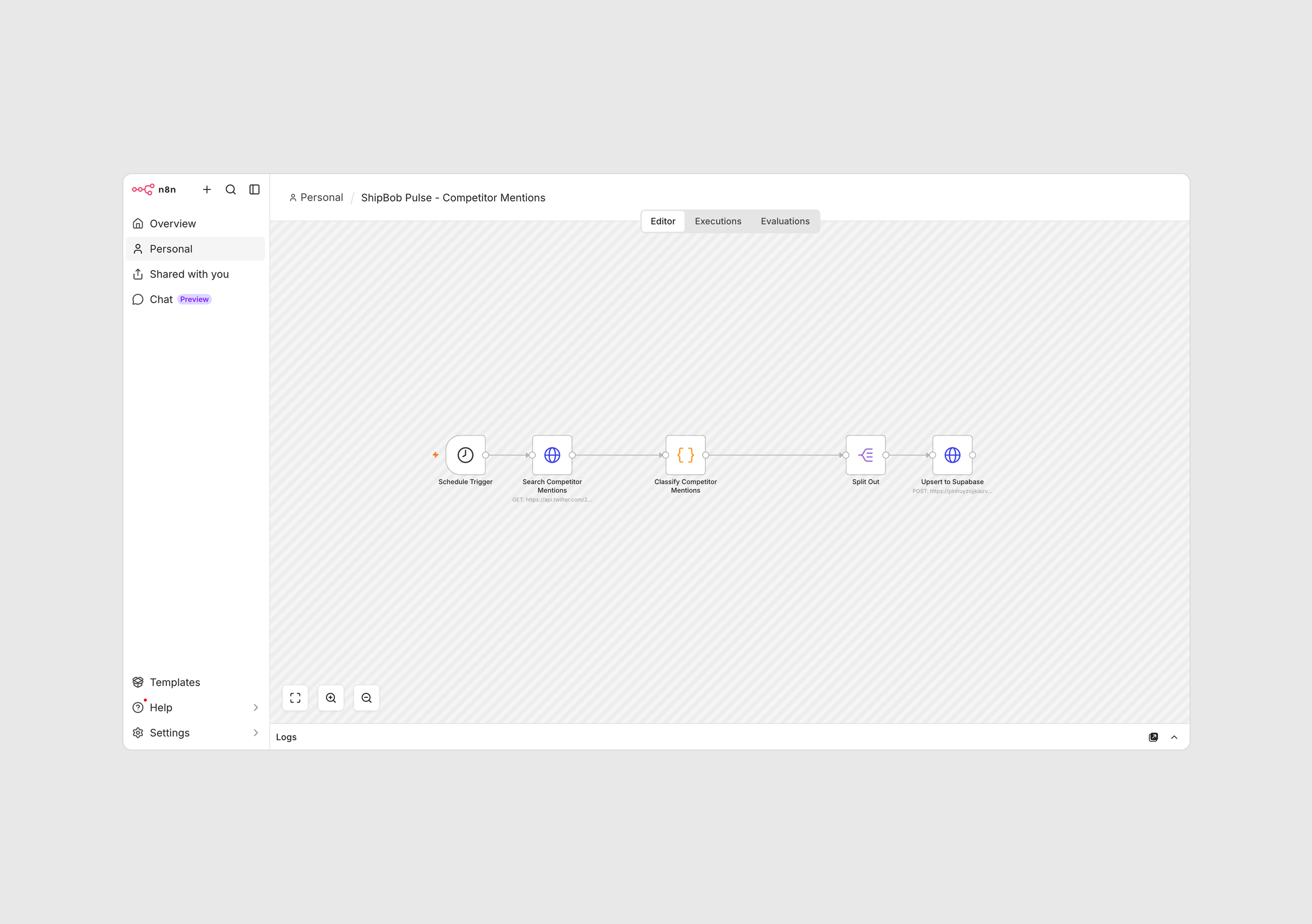
I used n8n for workflow automation. In Pulse, it runs the background jobs that poll each social or review platform on a schedule, send new mentions through Claude for classification and scoring, write the results to a database and fire Microsoft Teams notifications when something needs attention. While there were several workflows powering Pulse, seen here is the one that pulled in competitor mentions.
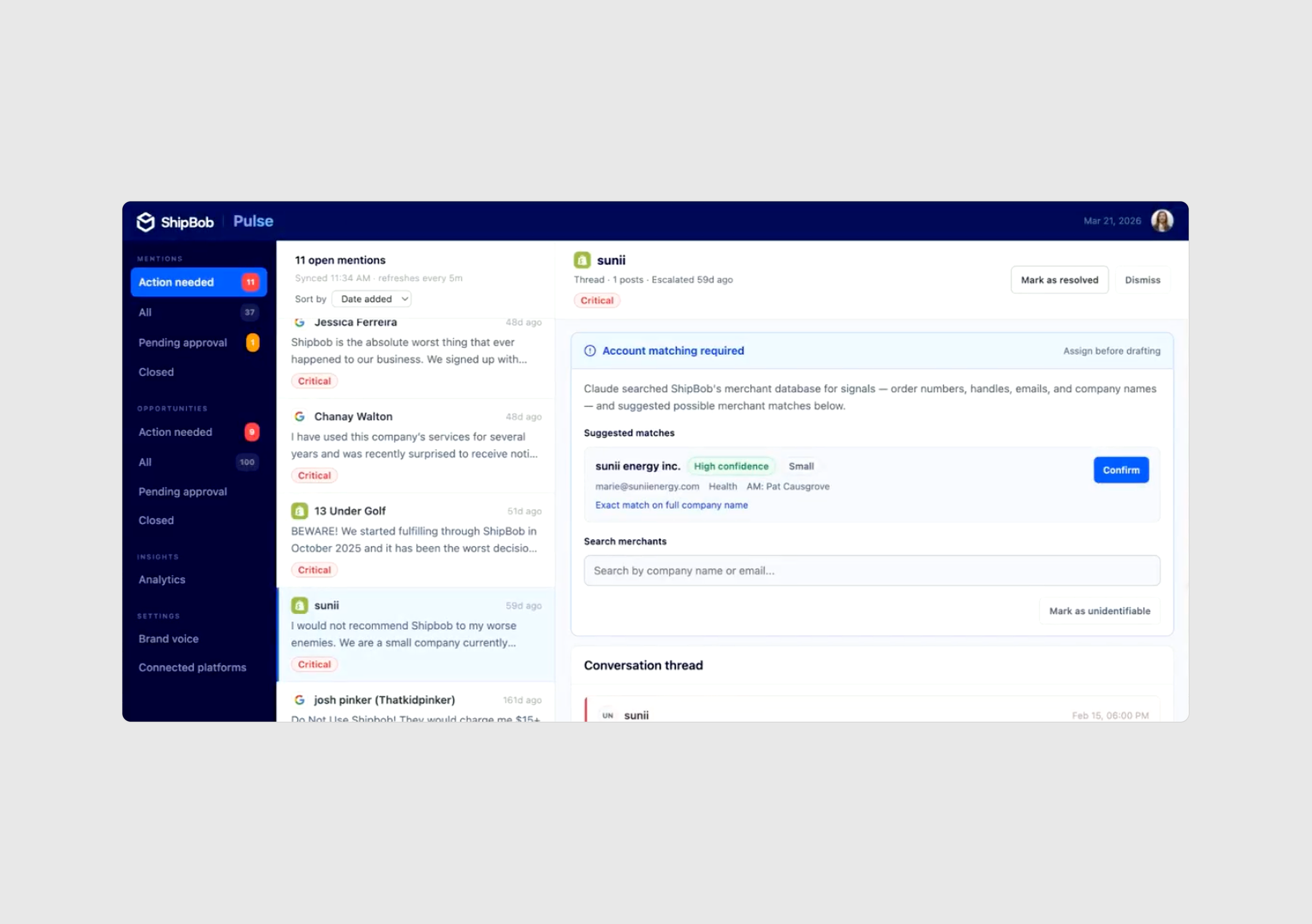
The core, original functionality of Pulse is automatically pulling in ShipBob mentions from social and review platforms, which you can see here. Also seen here is the feature that searches our Salesforce database to actually match the mention with one of our merchants. This review was pulled in from the Shopify app store and matched with an active merchant.
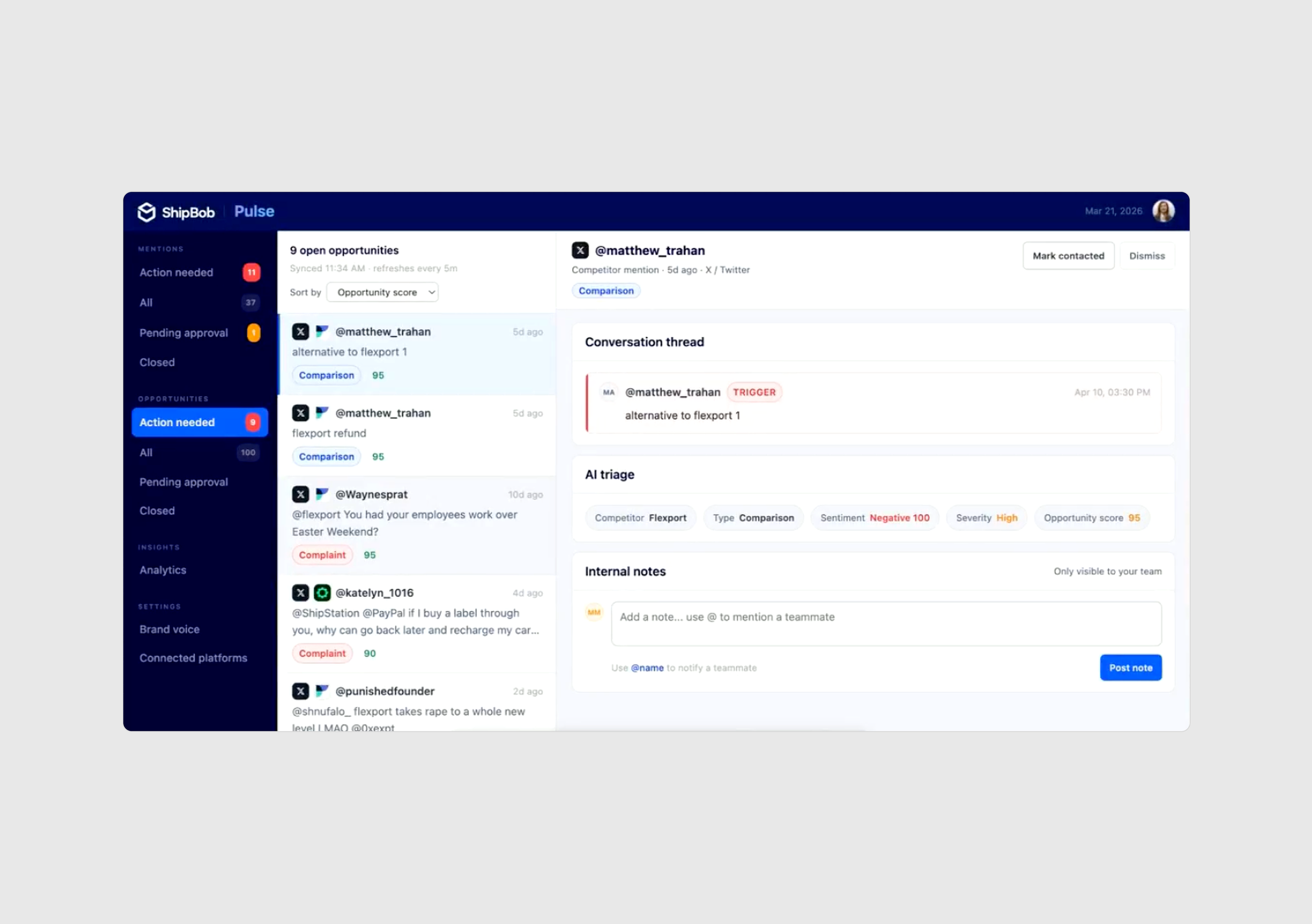
As this product evolved, I considered other applications of the workflows I was leveraging. That led me to also scanning social and review platforms for competitive intelligence.
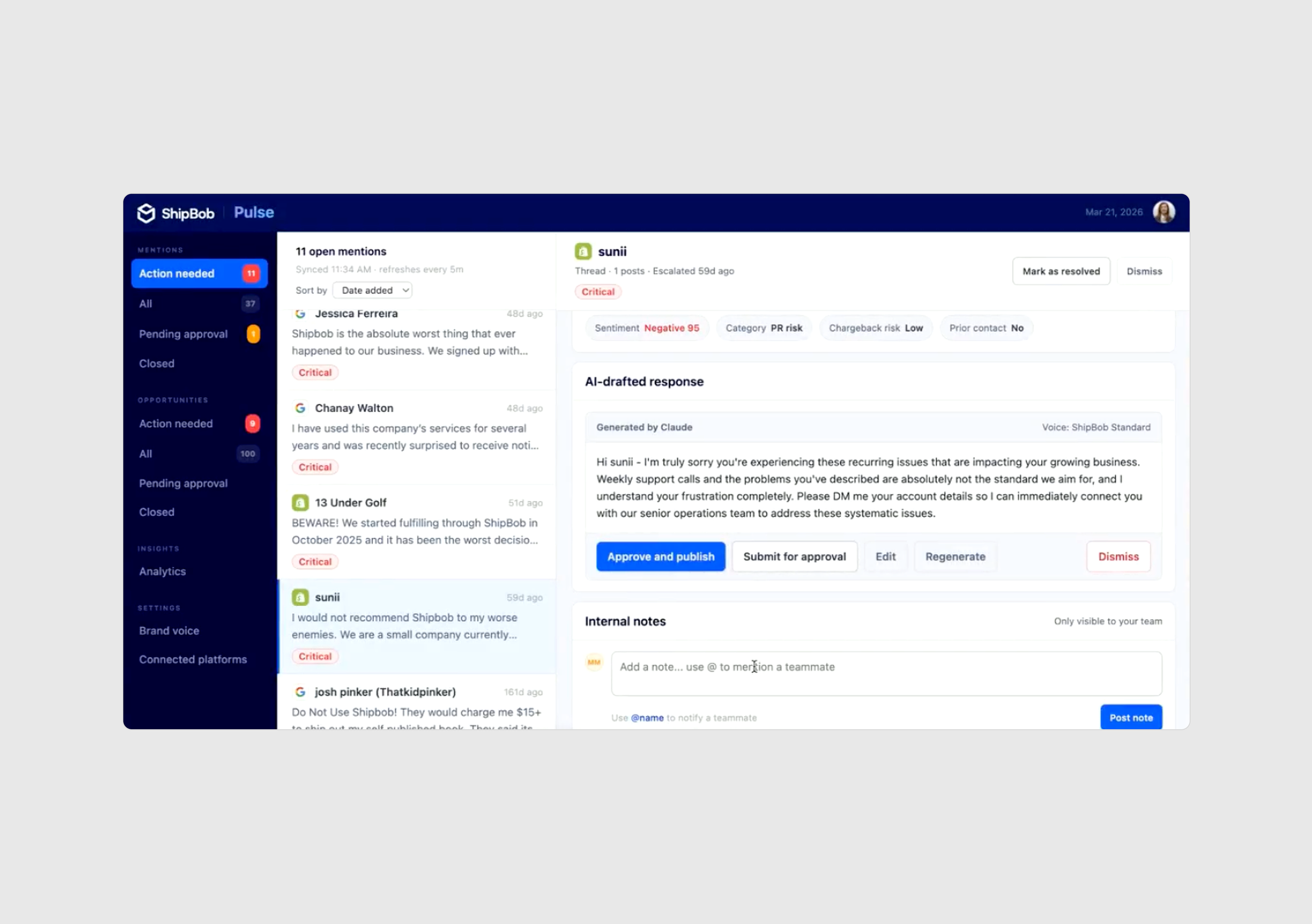
When a mention comes in, Claude generates a draft response.
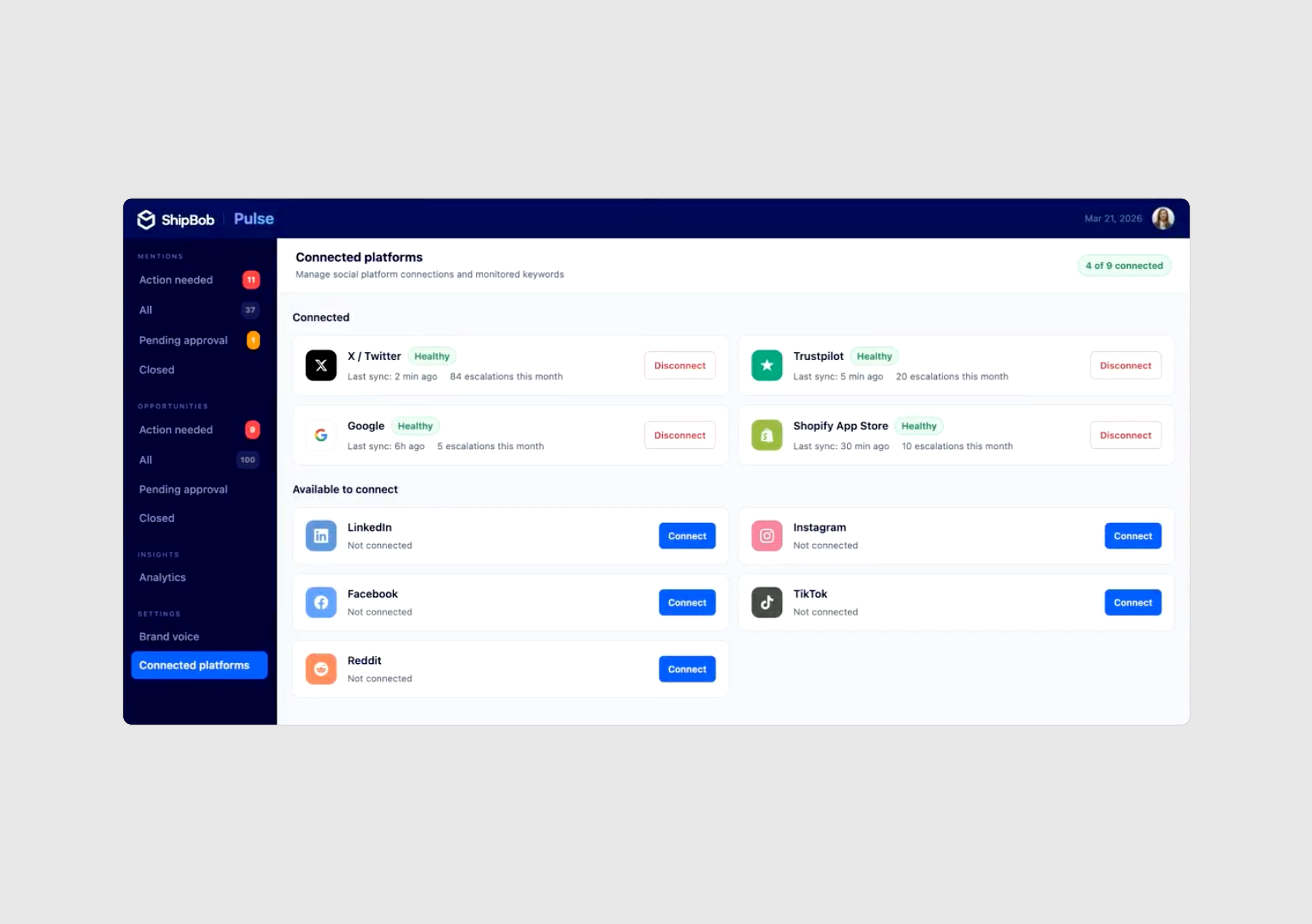
Here a user can see the connected platforms, as well as those that are currently not connected. The platforms I prioritized connecting were those that were deemed highest value by key stakeholders.
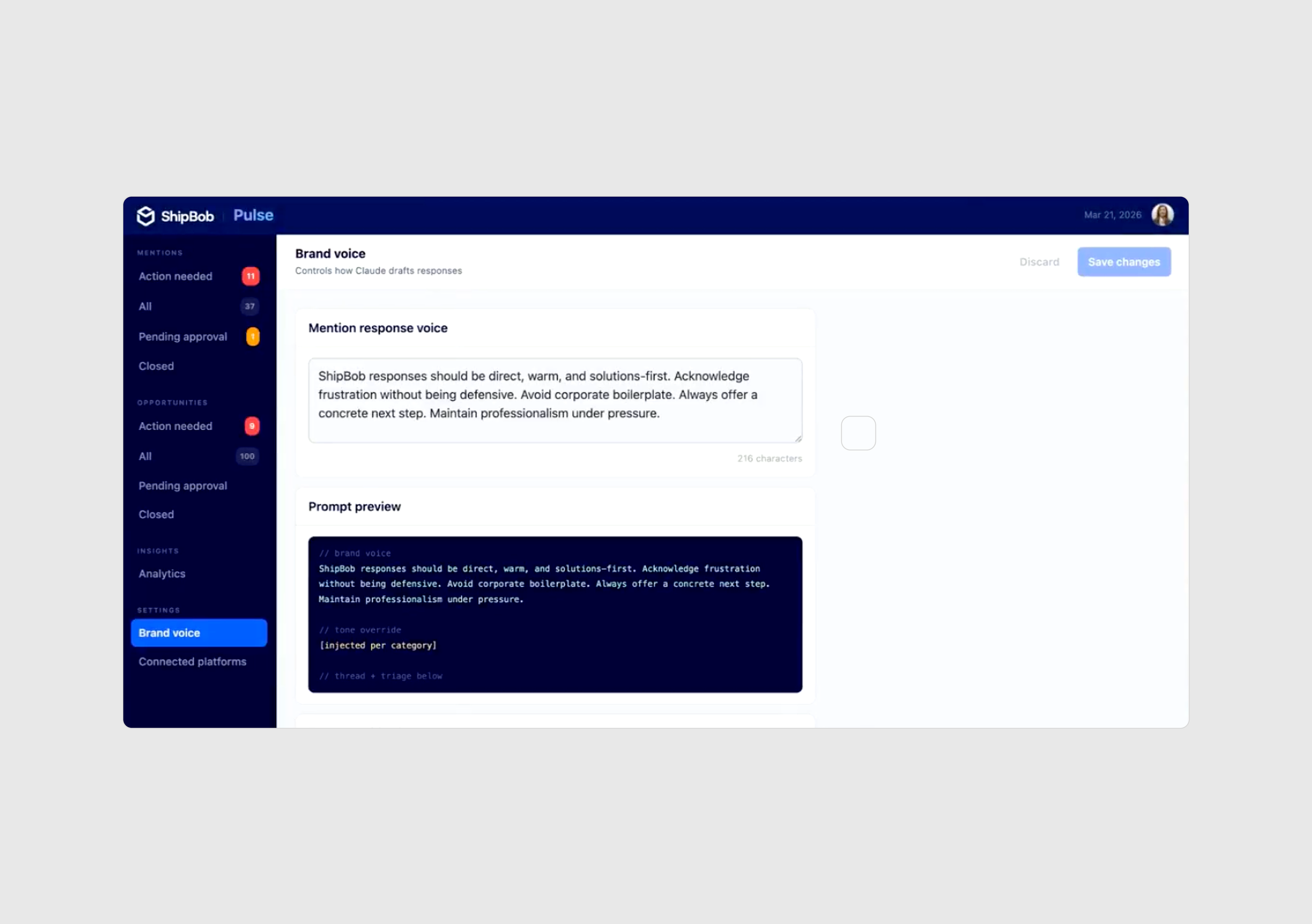
From the brand voice screen, a user can tweak what auto-generated responses sound like.
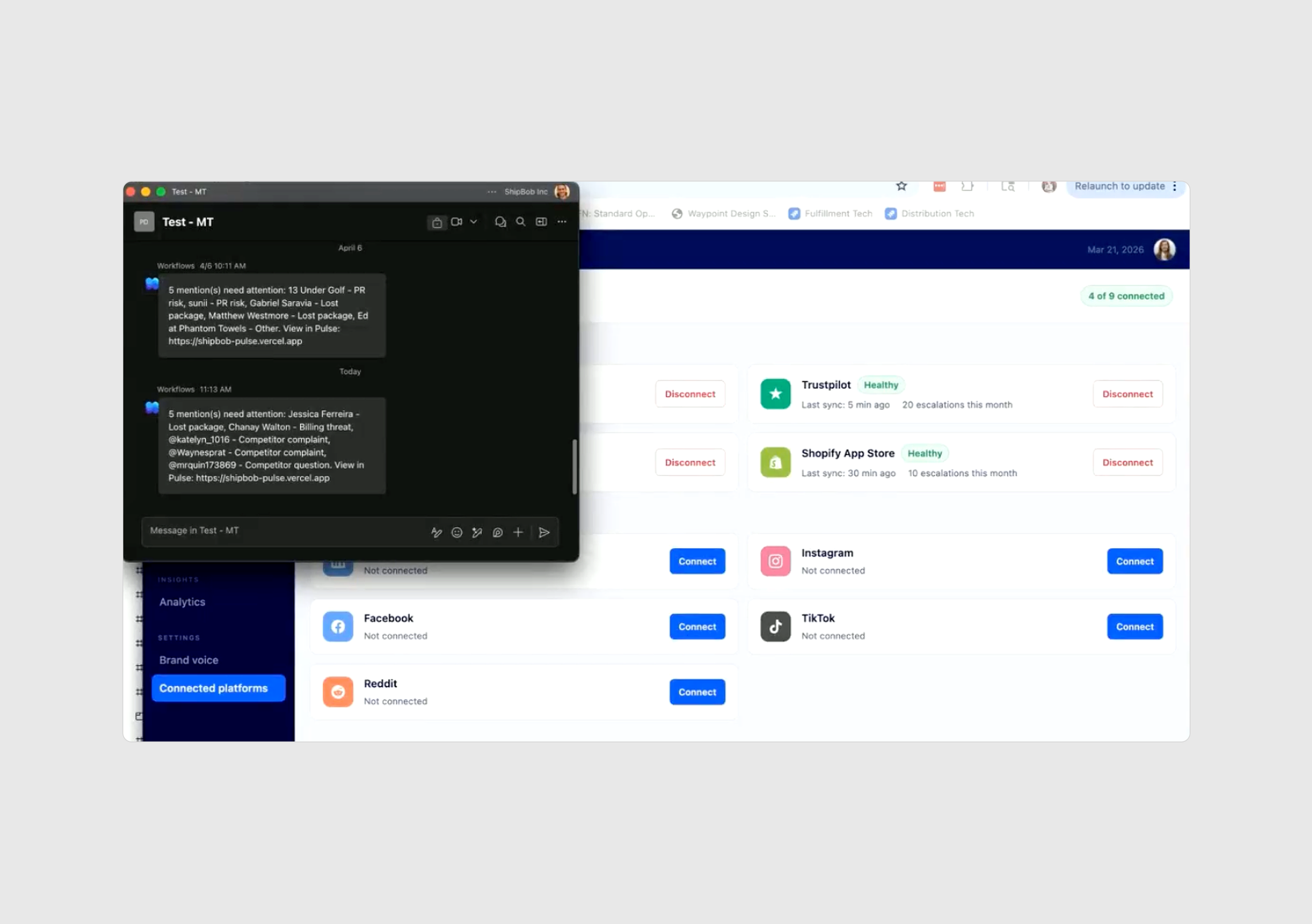
Fundamental to this application is the concept of pushing information to users, not just pulling. Our users were very clear: they want to know about these mentions, negative ones in particular, as soon as they can. This Teams notification system allows us that visibility.
Process
Frame
The challenge gave me a broad starting point: “auto-response engine for social escalations.” I framed the opportunity around a bigger question: how might we help ShipBob identify, prioritize, and act on important conversations happening across social and review platforms?
Discover
I spoke with Marketing to understand how they monitored for signals today, what required their attention, and where opportunities were being missed. These conversations revealed needs beyond responding to escalations, including prioritizing high-risk mentions and identifying potential sales opportunities from conversations about competitors.
Explore & define
I explored how AI and automation could bring these signals into a single experience without removing human judgment from the process. I defined workflows for monitoring, classification, response drafting, approvals, account matching, and opportunity scoring with clear controls over when AI could act and when a person needed to step in.
Design & deliver
Using Figma and Claude, I designed and built Pulse as a working application, connecting the interface to automated workflows, AI capabilities, real-time data, and Teams notifications. I iterated with the teams who would use it, refining the experience from prototype through production before shipping it for real-world use.