Multi-layered kitting
Project overview
For much of its history, ShipBob primarily served small and medium-sized businesses. As the company moved upmarket to support larger, more complex merchants like Vuori, True Classic, and AG1, our product capabilities needed to evolve alongside our customer base.
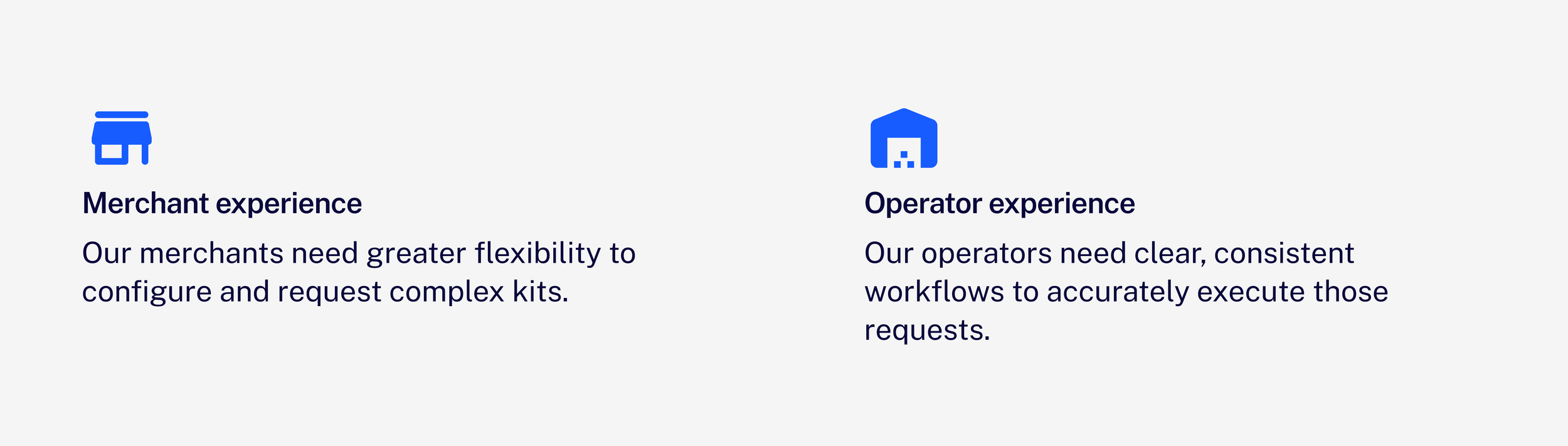
Kitting, which involves taking several individual SKUs and combining them into a parent SKU, was one such example. Supporting these merchants required us to rethink both sides of the experience: how merchants create and manage complex kitting orders, and how fulfillment center operators execute those orders accurately and consistently.
To design this solution, I collaborated with my teammates in product, merchant success, and engineering and spent time talking to merchants and our operators on-site in our fulfillment centers.
Team
I collaborated with a product lead, engineering, merchant success, and our operators in fulfillment centers.
Role
I led all research, design, and testing.
Impact
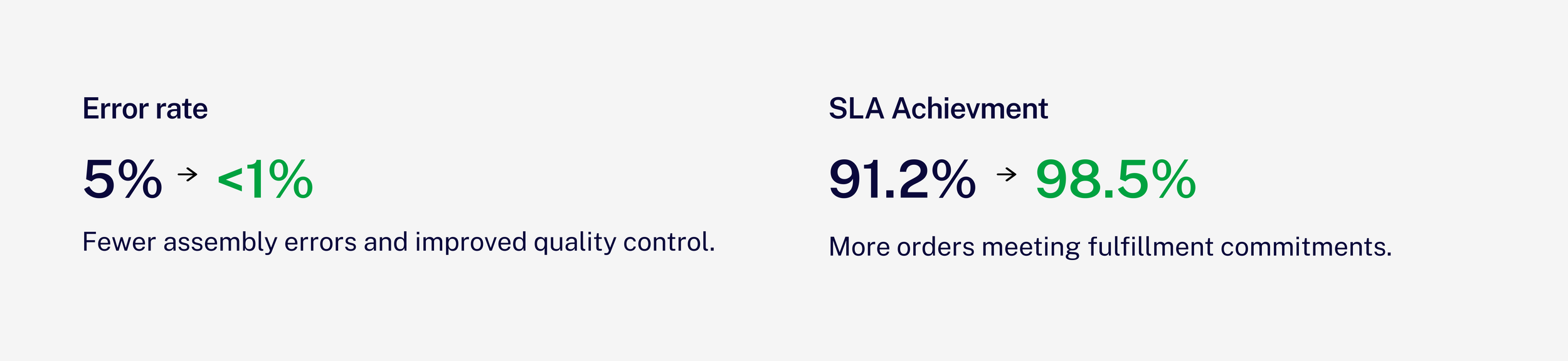
Our solution dropped fulfillment error rate from 5% to <1% and improved SLA from 91.2% to 98.5%.
The challenge
How might we support increasingly complex merchant kitting requirements while making fulfillment center operations more standardized, efficient, and reliable?
My approach
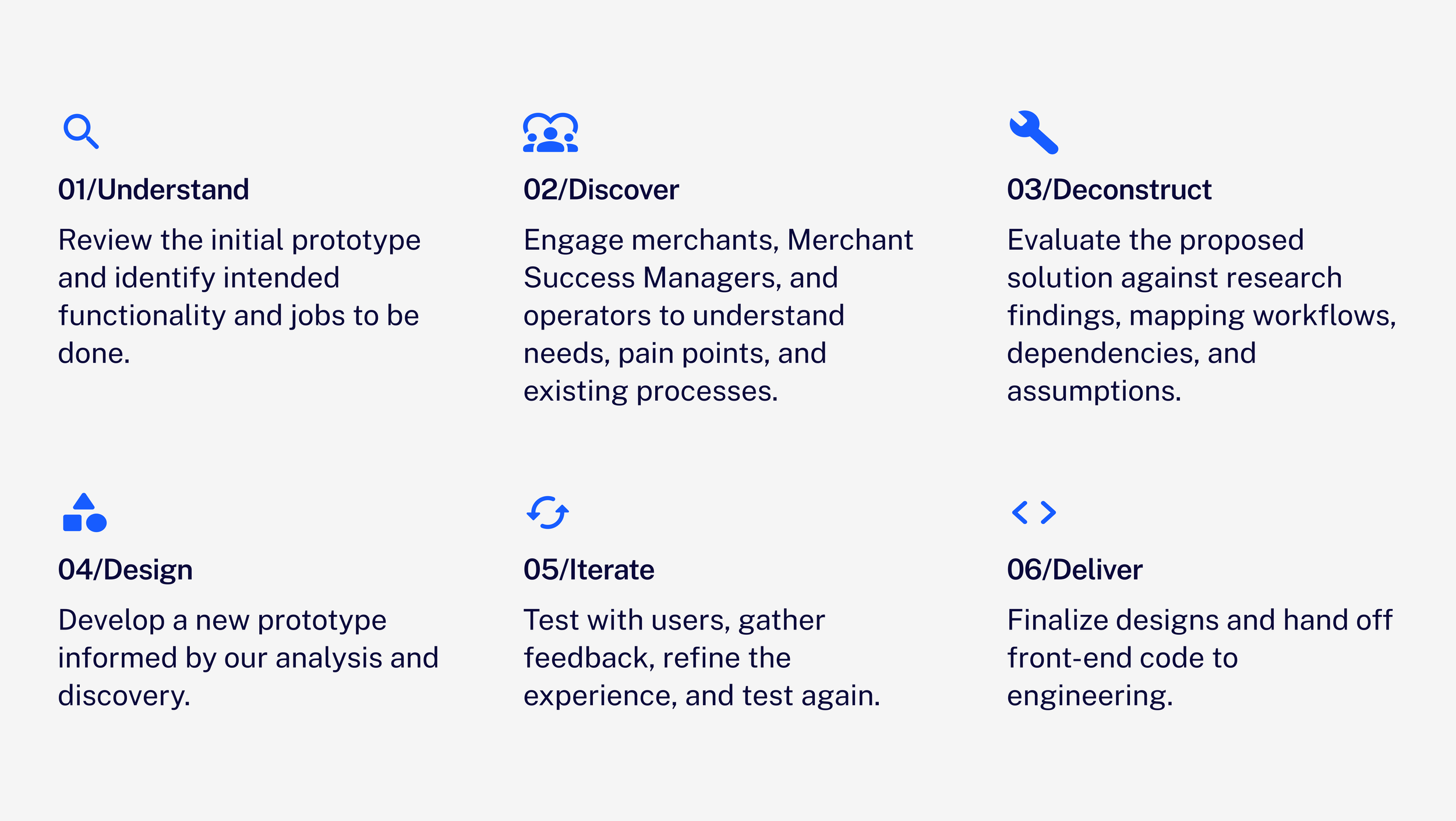
Reflecting how our ways of working are evolving, this project began with a sophisticated, clickable prototype that was quickly put together by our product lead. While helpful as a starting point for our collaboration, the prototype was very complex and had yet to be validated with users. Rather than immediately refining the proposed solution, I needed to work backward: unpacking its assumptions, understanding the underlying problems, and establishing a research-informed foundation for moving forward.
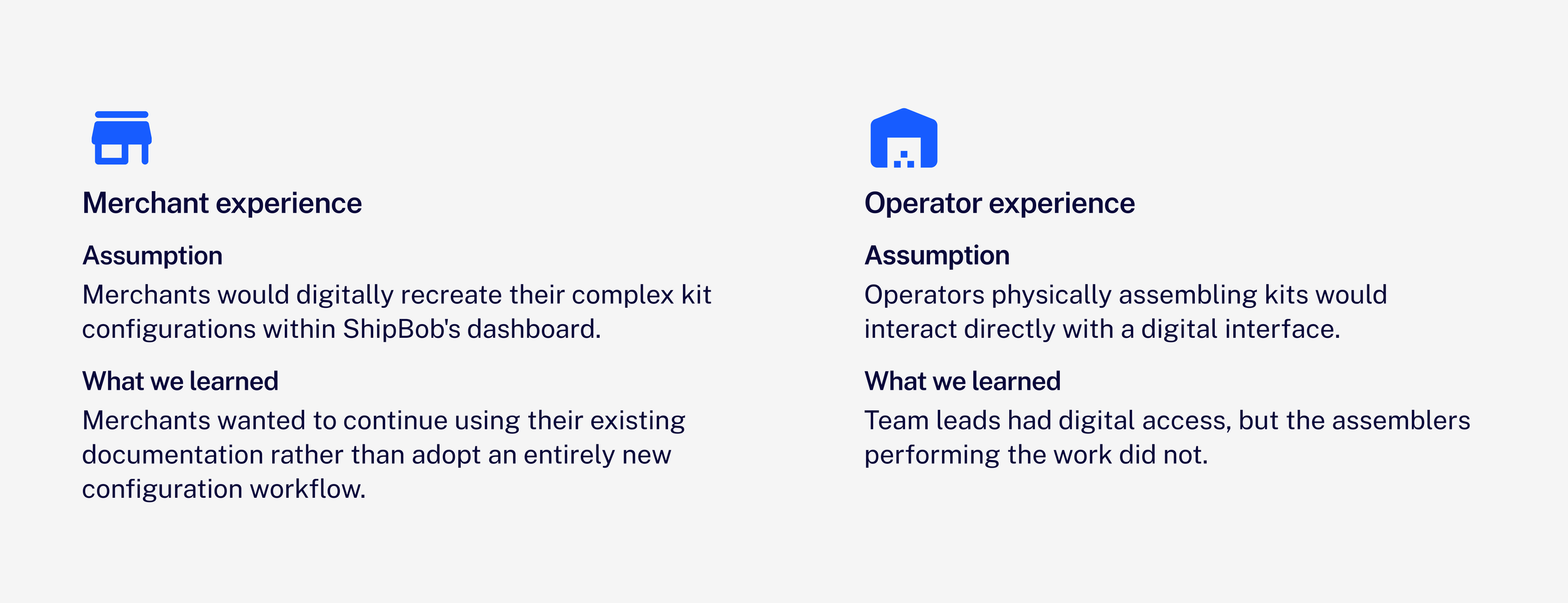
Discovery challenged our assumptions
Conversations with merchants, our merchant success team, and fulfillment center operators revealed two fundamental disconnects between the proposed solution and how work actually happened.
Bringing clarity to the complex
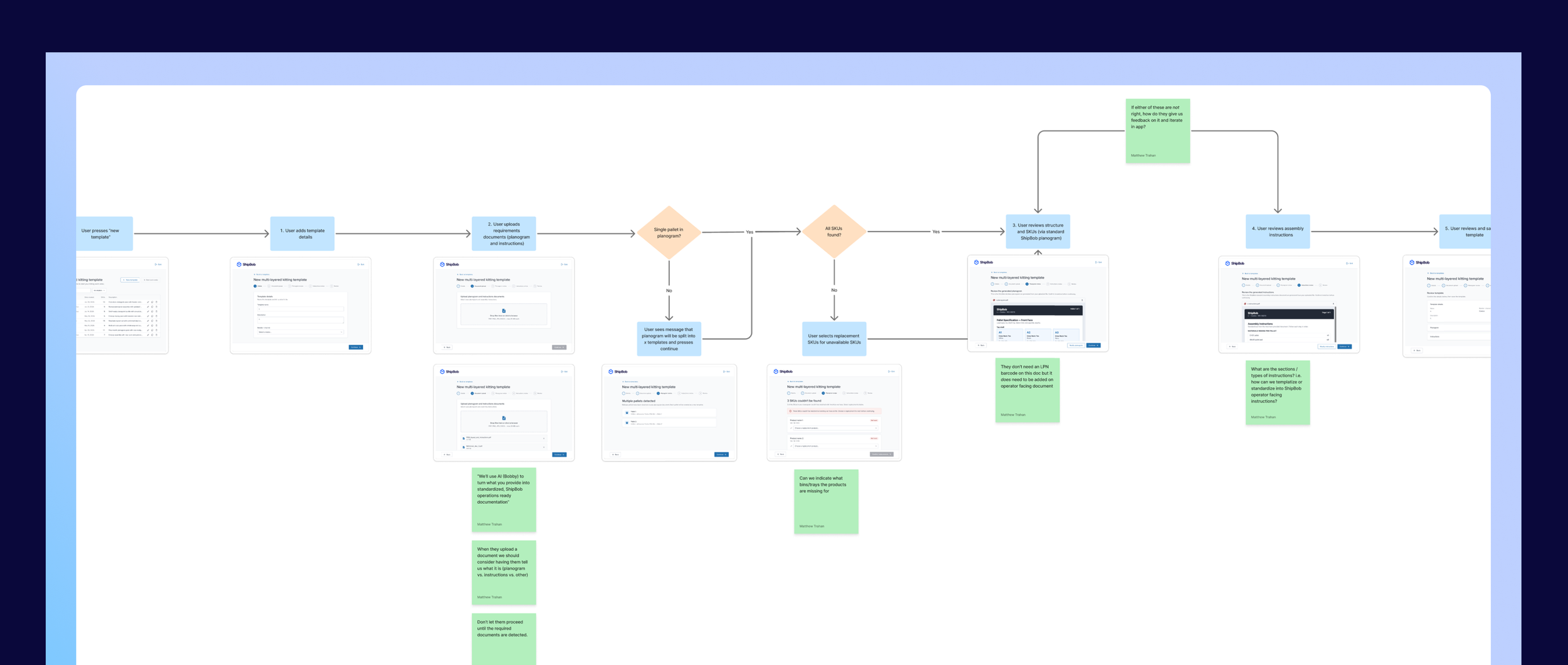
With a clearer understanding of our users' needs and operational constraints, I mapped the end-to-end experience to identify workflows, dependencies, decision points, and opportunities to simplify. Now more than ever, thinking at a system-level, not just the screen-level is essential.
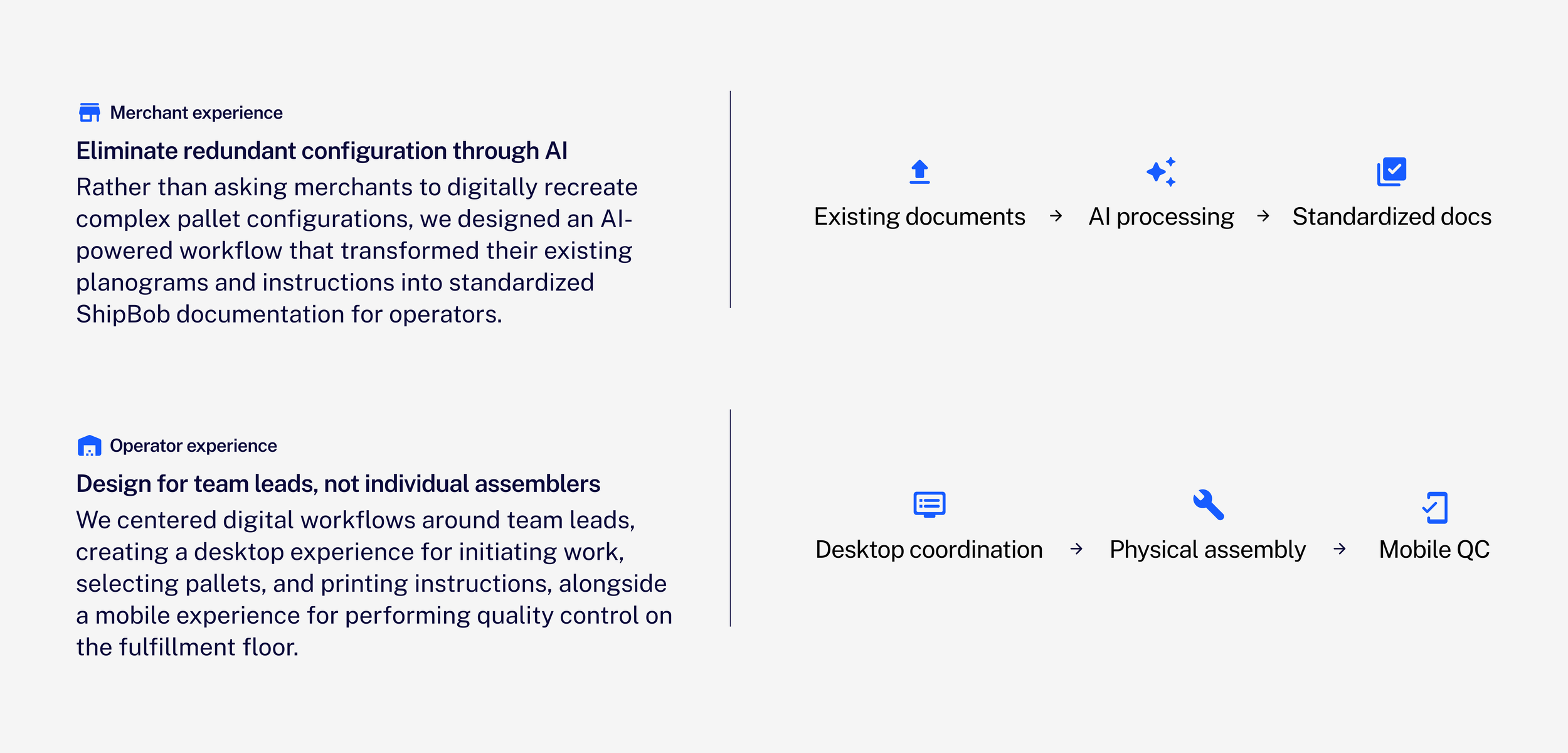
Designing based on how users actually work
Discovery led to two fundamental decisions that reshaped the experience.
The solution
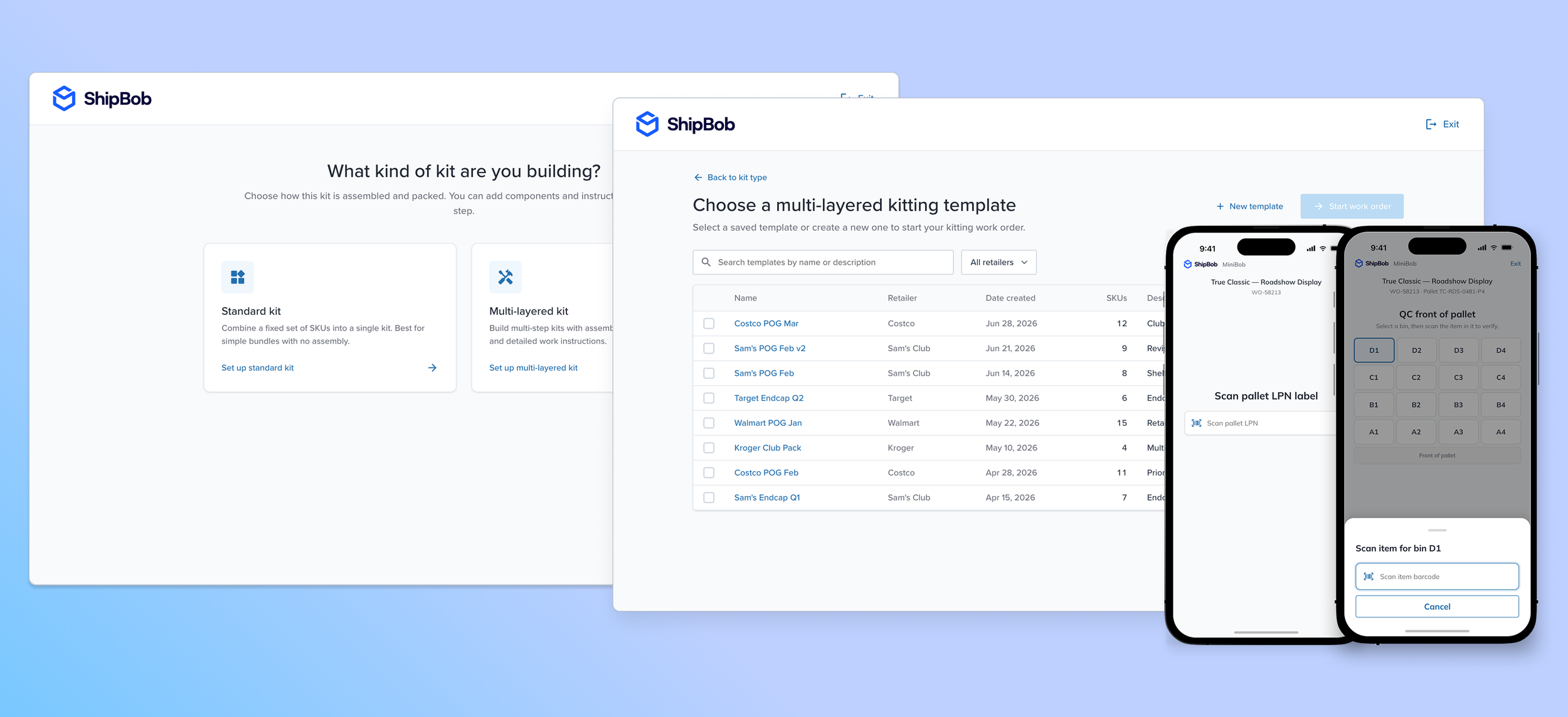
I designed three interconnected experiences: merchant-facing workflows for template and work order creation, and a fulfillment center operator-facing experience for work order execution.
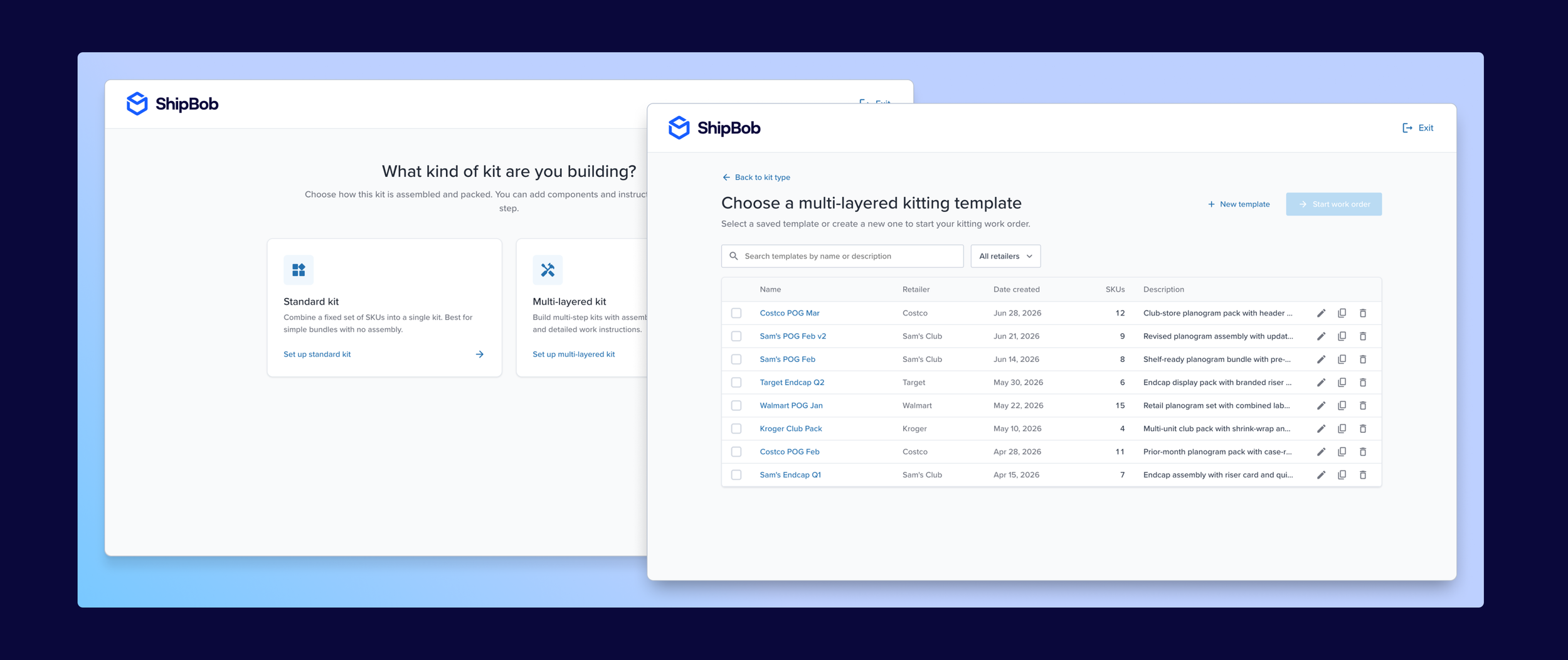
Accessing the new multi-layered kitting experience
Select users would see the option to enter into the new experience.
Creating a template
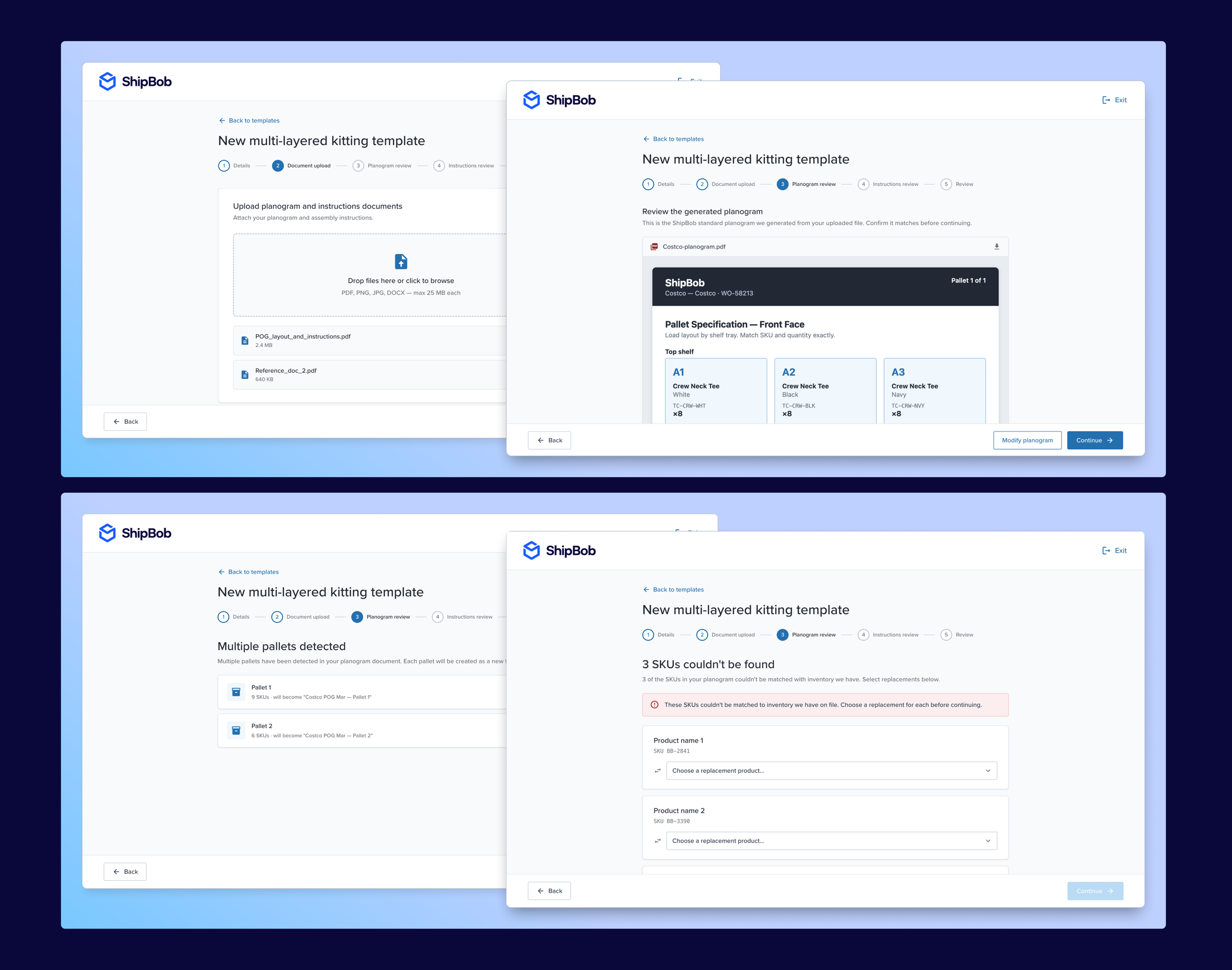
We removed the burden of manual configuration: as opposed to early prototypes that required extensive configuration by merchants, our updated UX simply required them to upload their existing documentation. AI processing would turn those documents into standardized documents our operations team could execute on.
Creating a work order
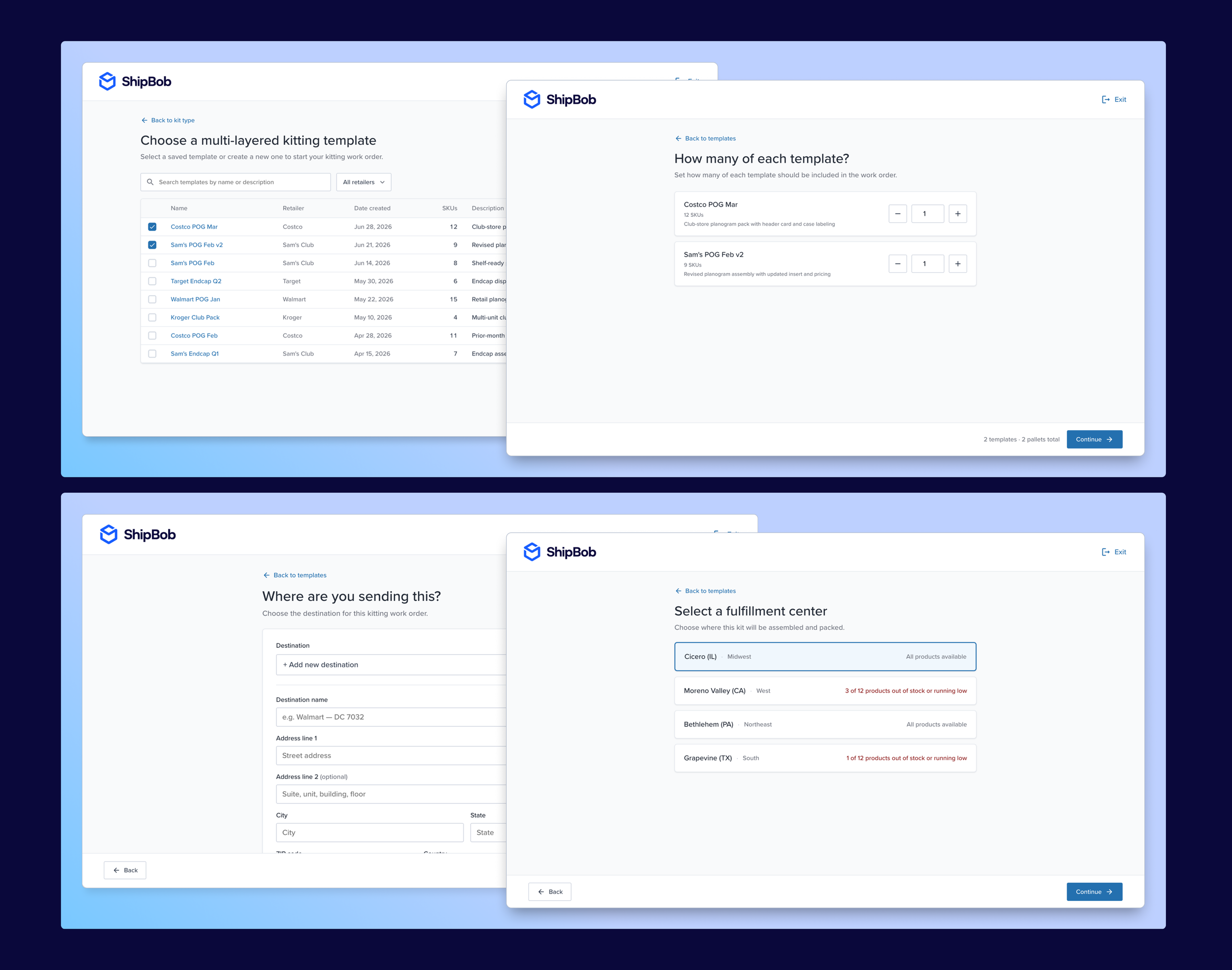
Once created, templates can be reused across multiple work orders. This flow allows merchants to create and submit work orders for execution by our fulfillment center operations teams.
Fulfilling a work order
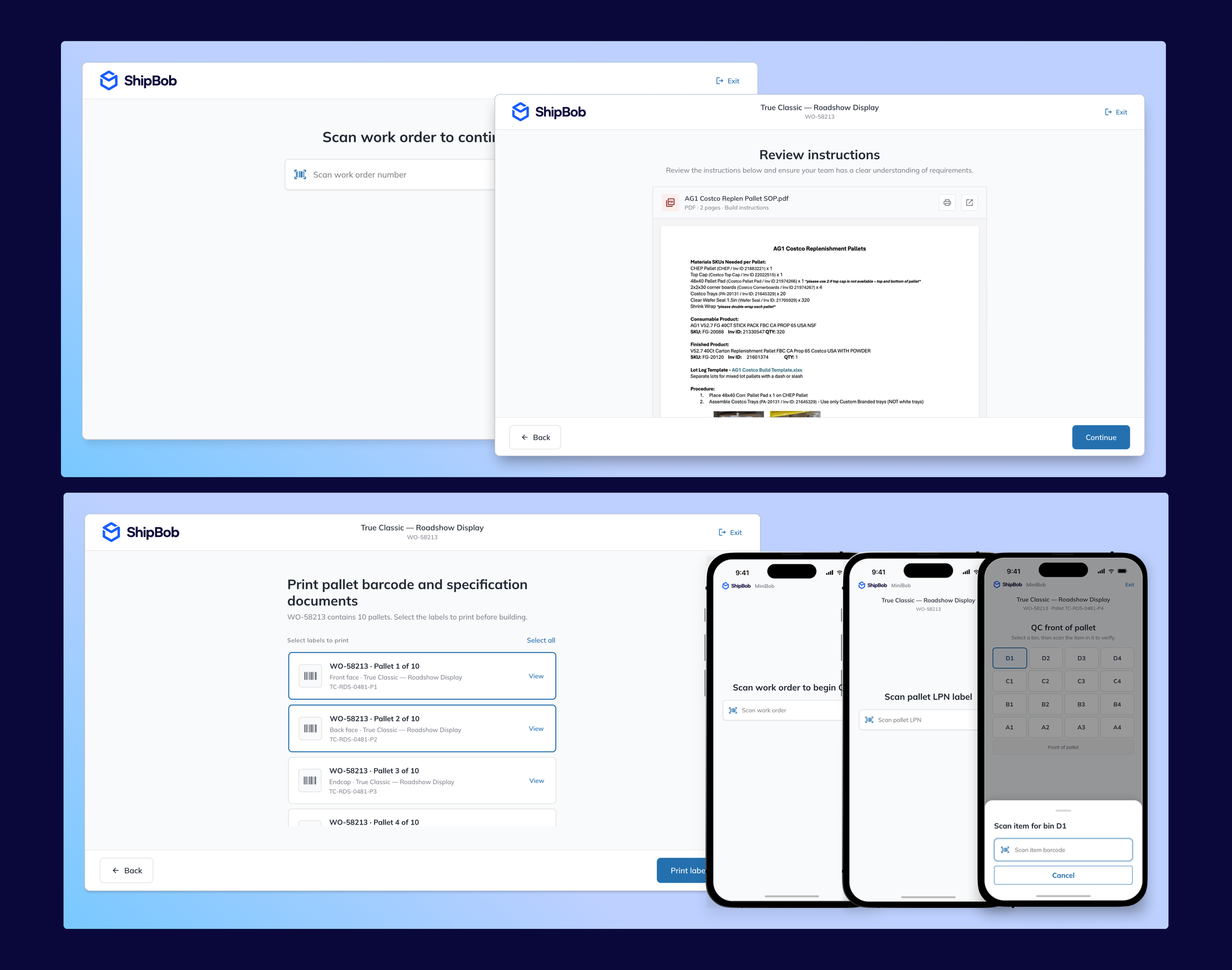
The reusable templates become artifacts that our operations team can execute on with efficiency and accuracy.
Impact
This experience, released in beta under a high level of scrutiny for one of our most important merchants, delivered measurable improvements in fulfillment quality and reliability.
Reflections
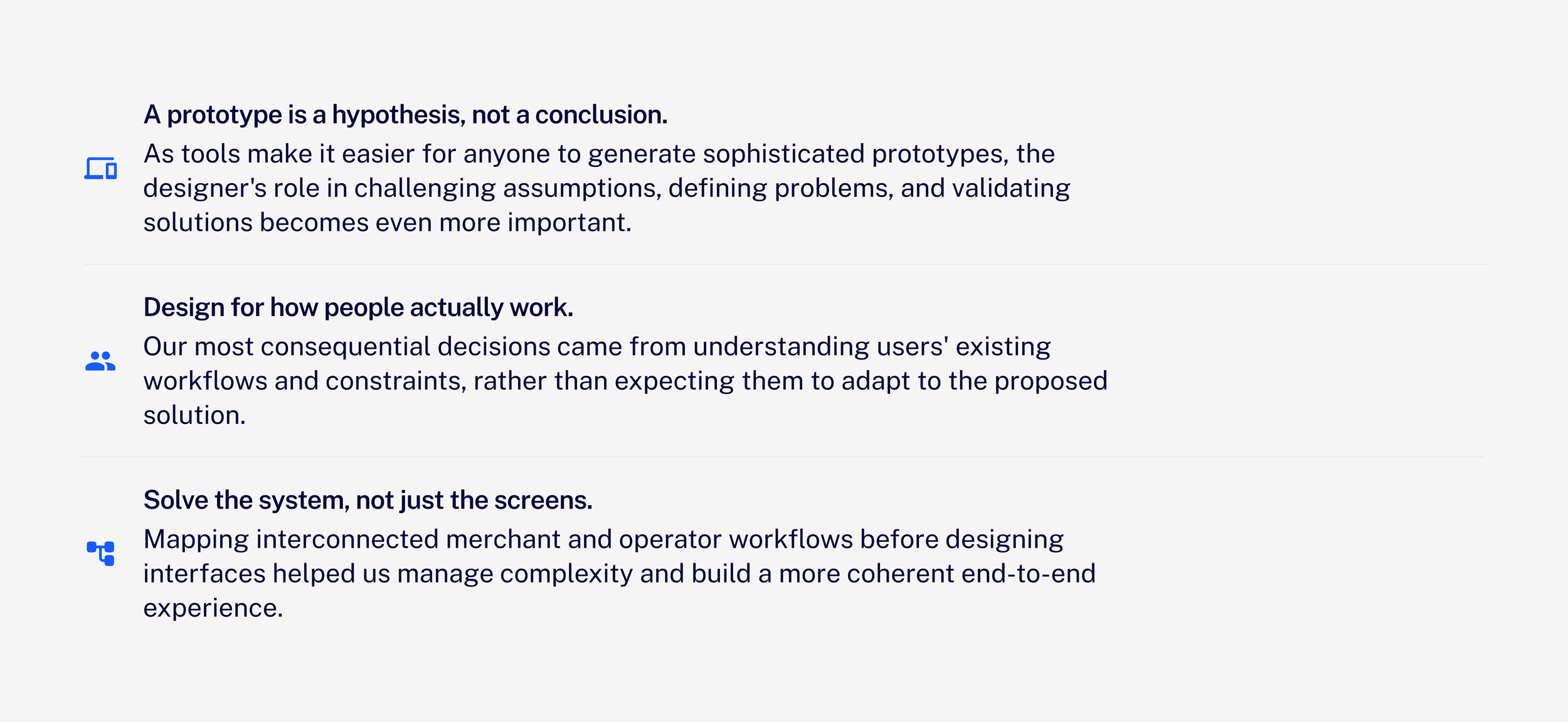
Three lessons that continue to shape how I approach product design.